McCourt School - Foundations
Training Graduate Students for a Career in Computational Social Science
Prof. Tiago Ventura | McCourt School | Georgetown University
2023-08-18
Plans for today
Introduction: Who am I and how I got here.
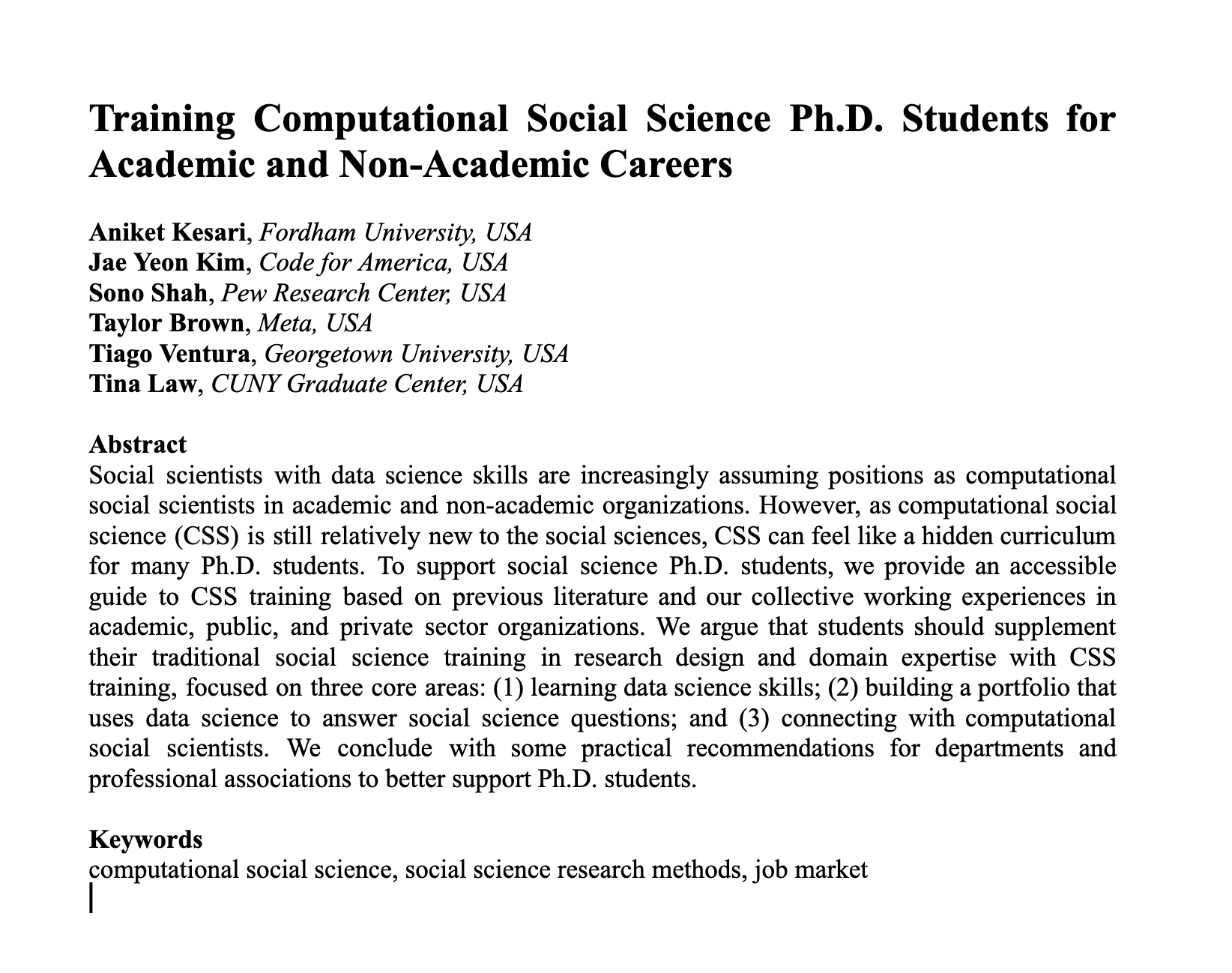
Training Graduate Students for a Career in Computational Social Science (article here)
Lots of Discussion
About me
Professor Tiago Ventura (he/him):
- Assistant Professor at McCourt School.
- Before that: Postdoc at CSMAP-NYU and a Researcher at Twitter.
- PhD from the University of Maryland, College Park
- PhD from State University of Rio de Janeiro, Brazil
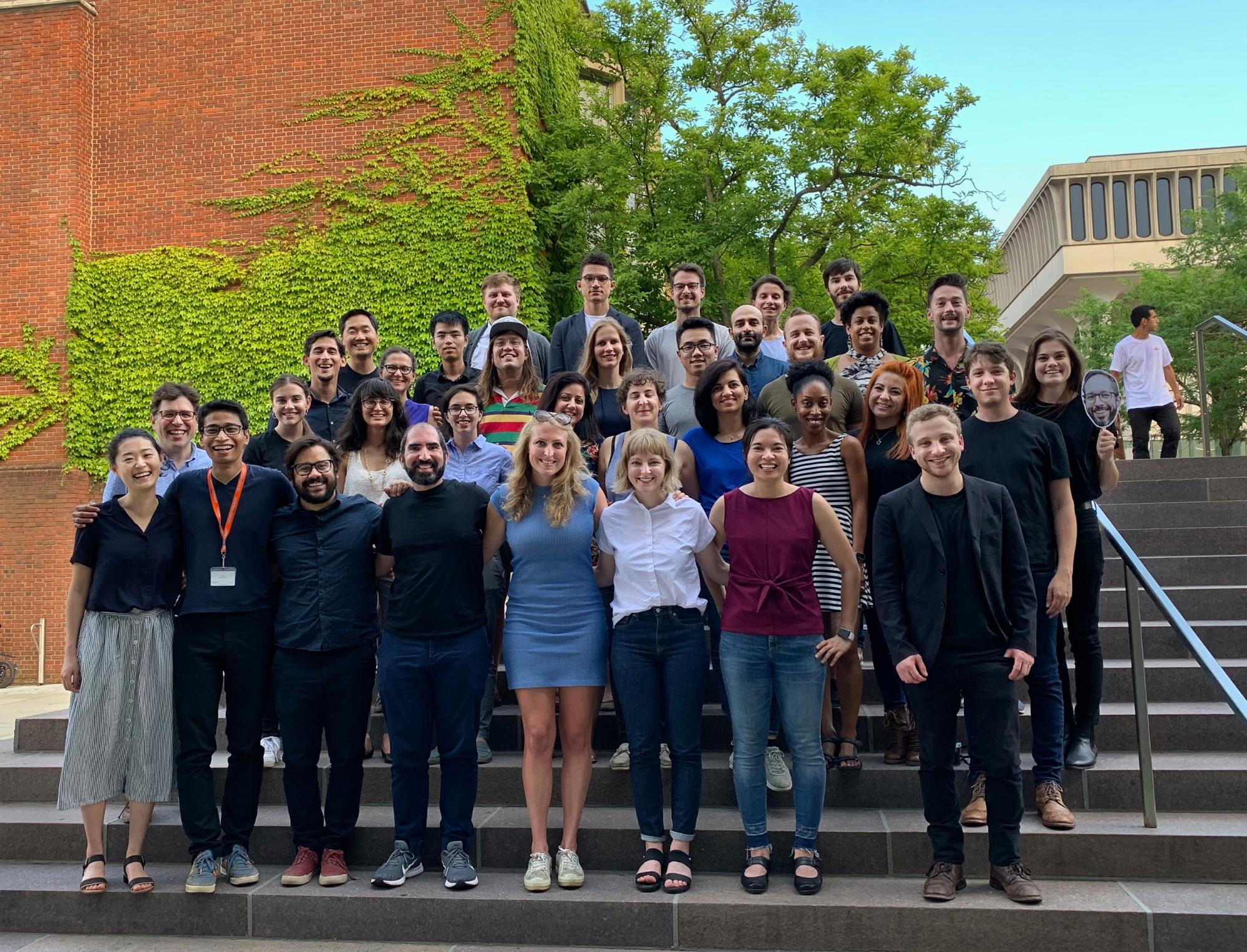
Summer Institute in Computation Social Sciences
Computational Social Science
We define computational social science as a field that engages the social sciences and data science by applying novel digital and digitized data and computational methods to advance social scientific understanding of human behavior
Formalizing the Hidden Curriculum
Step 1: Learning Data Science Skills
Step 2: Build a CSS Portfolio
Step 3: Engage in the CSS Networks
Step 1: Learning Data Science Skills
Programming fluency in R and/or Python.
Experience with data management, particularly with managing large, messy, and unstructured data.
End-to-end research pipeline + Domain expertise.
Build strong foundations in statistical inference, causal inference and machine learning.
Step 2: Building a Computational Social Science Portfolio
Engagement with social and applied aspects of a data science.
Learn and use Git/Github for ALL YOUR PROJECTS.
Make your data science project available on Github and write blog posts about them
Step 3: Connecting with Computational Social Scientists
Attend CSS conferences and focus on horizontal networking
Internships are hugely important (All tech companies offer + non-profits, such as Civic Digital Fellowship and Data Science for Social Good Fellowship)
Online networks: linkedin + Twitter + Github
Q&A
McCourt Foundations